REQUEST A QUOTE
GTA Exterminators
Pharmaceutical Pest Control
GMP Facilities & Cleanroom-Adjacent Spaces
Serving the Greater Toronto Area
We are here for you 24 hours a day, 7 days a week

GMP-Compliant Pest Control for Toronto's Pharmaceutical Facilities

Pest Control for Pharmaceutical Manufacturing Facilities Across the GTA

Pharmaceutical Pest Control Service

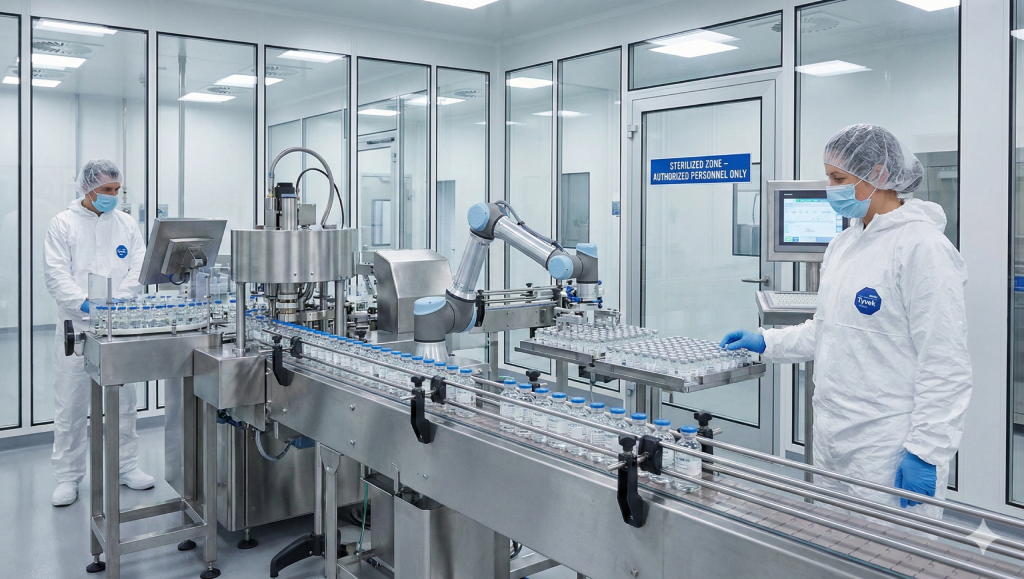
GTA Exterminators provides pest control built for GMP-regulated pharmaceutical facilities, where a single pest sighting isn't a housekeeping issue — it's a quality event. We run a low-chemical IPM program designed around cleanrooms, controlled environments, and the documentation your quality team needs on file.

  • Unmarked Trucks
  • Fully Licensed Pharmaceutical Pest Control Service
  • Fully Insured Extermination Company
  • Toronto-based Pest Control Company
  • GMP-Compliant Documentation & Reporting
  • WSIB, Certified and Trained Technicians
  • Background Checked Exterminators
  • Available 24/7 for Emergency Service


Need Pharmaceutical Pest Control in Toronto Today? 647 849 4441

Protect Your Facility's Compliance Record with an Award-Winning Pest Control Company in Toronto

Frequently Asked Questions About Our Pharmaceutical Pest Control Services
Does our program need to account for silverfish and paper-eating insects?
Yes, if your facility keeps paper archives, labelling stock, or cardboard packaging on-site — which almost all do. Silverfish and similar insects can damage documentation and packaging integrity, and it's a category auditors increasingly ask about specifically.
Does the pest control approach differ between our cleanroom and our warehouse?
Yes, significantly. A cleanroom or other controlled environment gets exclusion and non-chemical monitoring only. Once product moves to packaging lines or warehouse storage — areas that are less controlled and open their doors more routinely — the risk profile changes and the program has to reflect that.
Could pest control products themselves contaminate our starting materials or packaging?
That's exactly what CGMP rules are designed to prevent, and it's central to how we choose products and application methods. Anything used near production areas has to be selected specifically so it can't contaminate equipment, starting materials, or finished product.
Is there a defined threshold for when a pest sighting needs to be escalated?
Yes, and we'll help you set one if you don't already have it defined. A single confirmed sighting in a controlled area is usually treated differently than routine activity picked up at the perimeter — we work off action levels agreed with your quality team, not a one-size-fits-all rule.
What happens if an audit finds a gap in our pest control documentation?
It typically triggers a corrective and preventive action, or CAPA, which your quality team has to document and close out. We can help identify where the gap is and get monitoring records back in order before it becomes a repeat finding.
Do you provide digital or real-time reporting instead of paper logs?
Yes. Paper logs are still common in this industry, but digital records are easier to audit and harder to lose track of — we can set up whichever format fits how your quality system already documents everything else.
Does our facility's location change what pests we should be watching for?
Yes. A facility near water tends to see more rodent pressure, while one near open fields or agricultural land deals with more flying insects. We factor your specific site conditions into the risk assessment rather than applying a generic checklist.
Do your technicians need to follow our facility's gowning or clean room protocols?
Yes, and we expect that. Anyone working in a GMP-regulated space needs to follow the same gowning, hygiene, and access procedures as your own staff — we'll train to your specific SOPs before ever entering a controlled area.
Is the program different for our distribution warehouse versus the manufacturing side?
Yes. Distribution and wholesale spaces open their doors far more routinely for shipping and receiving, so the exclusion and monitoring approach there looks more like a standard warehouse program layered with your documentation requirements.
Do you offer emergency service if a pest is found during a production run?
Yes, we offer emergency response and can coordinate around your production schedule and downtime windows rather than forcing a line stoppage.
Get An Estimate

Complete the following information

Email sent successfully
Why us?
Pest Control Built for Toronto's Pharmaceutical & GMP Facilities
  • 24/7 Pharmaceutical Pest Control
  • Fully Licensed Pest Control Technicians
  • GMP & CFIA Audit-Ready Reporting
  • Low-Chemical IPM Programs
  • Cleanroom-Adjacent Pest Monitoring
  • Facility Trap & Bait Station Mapping
  • Scheduled Around Production Downtime
100 %
Guaranteed Quality
pharmaceutical pest control
Get Price
647-849-4441
Need Pharmaceutical Pest Control? 647 849 4441

Protect Your Product Integrity & Compliance Record with an Award-Winning Pest Control Company in Toronto

Pharmaceutical & GMP Services
Schedule Your Pharmaceutical Pest Control Service Today
GTA Exterminators works with pharmaceutical manufacturing and packaging facilities across the Greater Toronto Area. We build our programs around GMP expectations from the start — low-chemical methods, documented monitoring, and a plan your quality team can defend to an inspector. If pest activity is putting your compliance record at risk, get in touch and we'll come take a look.
Why Pharmaceutical Facilities Are Held to a Different Standard
In most industries, pest control is reactive — you spot a problem, you deal with it. In a pharmaceutical facility, a single confirmed pest sighting is often treated as a quality event, not a housekeeping issue, because the products involved are consumed by patients and even microscopic contamination carries real consequences. That mindset shapes everything about how the program has to run, from the products we're allowed to use near controlled areas to how thoroughly every visit gets documented.
Common Pests in Pharmaceutical Facilities
Flying insects and rodents are the primary concern, since either can compromise a cleanroom or controlled environment if they get past the perimeter. Stored-product pests are also a factor anywhere raw materials, excipients, or packaging are held in warehouse-style storage before or after production. Cockroaches and ants show up in break rooms and receiving areas the same way they would in any commercial building, but the tolerance for their presence is much lower here.
Working Around Cleanrooms & Controlled Environments
Chemical treatment isn't an option inside or near a controlled environment — the risk of product interaction outweighs any benefit. Instead, the program leans heavily on exclusion, sanitation, and monitoring: sealing the building envelope, managing exterior lighting to reduce insect attraction, maintaining a vegetation-free perimeter, and placing traps and monitoring devices at every access point rather than treating with chemicals near sensitive areas. Where treatment is genuinely necessary, it happens in non-controlled zones — receiving docks, exterior perimeter, general warehouse space — and is scheduled around your production and cleaning cycles so it never interferes with a controlled process.
Documentation for GMP & Regulatory Audits
Health Canada and GFSI-benchmarked schemes like BRC all expect pest control to be a documented, auditable part of your quality system, not an informal arrangement with whoever's cheapest. That typically means a facility map showing every trap and bait station location, monitoring records logged on a set schedule — often every two weeks — and a documented response any time activity is found. We build that documentation into every visit from day one, so your quality team has a complete, audit-ready file rather than scrambling to reconstruct one before an inspection. If you're setting up a pest control program for a new facility or updating an existing one ahead of an audit, we can walk you through what auditors typically expect to see.
Preventing Pests in a Pharmaceutical Facility
Most of the risk gets managed before it ever reaches the building. An 18-inch vegetation-free perimeter around the structure removes a common source of insect harborage. Exterior lighting matters more than people expect — sodium vapour or LED fixtures attract far fewer flying insects than standard mercury or high-output bulbs. Inside, sealed receiving doors, well-managed break rooms, and prompt attention to any water source all reduce the odds of an issue reaching a controlled area in the first place.
Our Pharmaceutical Pest Control Process
When we take on a pharmaceutical facility, the plan is built around your specific layout and controlled areas from the start. To get a sense of scope and cost before booking, visit our free estimate page. Our licensed technicians are experienced working within GMP environments and can coordinate around your production and cleaning schedules.

1. Facility Walkthrough & Zoning – Map the facility into controlled, semi-controlled, and general areas to determine what methods can be used where.

2. Risk Assessment – Identify entry points, attractants, and any prior pest activity that could pose a compliance risk.

3. Pest Identification – Confirm exactly which pests are present or likely, since controlled-area proximity limits which treatment options apply.

4. Low-Chemical Treatment – Apply approved methods to non-controlled zones only, using exclusion and monitoring wherever chemical treatment isn't appropriate.

5. Trap & Device Mapping – Install and document monitoring devices at every access point, recorded on your facility's site plan.

6. Exclusion & Perimeter Work – Seal building envelope gaps, address lighting, and maintain the vegetation-free perimeter that limits pest pressure.

7. Scheduled Monitoring – Regular device checks — typically every two weeks — with trend tracking so issues get caught before they escalate.

8. Documentation & Reporting – Complete, audit-ready records maintained for every visit, formatted for GMP, CFIA, or BRC review.


Questions & Answers
What happens if a pest is found inside a controlled area?
It triggers a documented investigation, not just a trap check. We help identify the entry point, correct it, and provide the paper trail your quality team needs for a deviation report.
Is there a difference between a pest sighting and a reportable pest incident?
Generally yes. A sighting caught by a monitoring device at the perimeter is routine and gets logged. Activity confirmed inside a controlled area, or anywhere near product, usually crosses into incident territory and triggers your deviation process.
Can a moisture issue or a small leak really cause an audit finding related to pests?
Yes. Auditors know moisture attracts pests, so an unresolved leak is often flagged as a contributing risk factor even before any pest activity is confirmed. We flag these during inspection so they get fixed before they become someone else's finding.
Does every pharmaceutical facility need the same level of pest control?
No. What you produce matters — a facility handling injectables or sterile products needs a tighter program than one focused on packaging finished tablets. We scope the plan to your specific product risk, not a blanket standard.
Can you help prepare our pest control documentation ahead of a scheduled inspection?
Yes. We can review your monitoring logs and trap maps with your quality team ahead of a Health Canada inspection and flag anything that looks incomplete before an inspector does.
Get Price

Complete the following information

Email sent successfully
Call Now Get Free Quote